
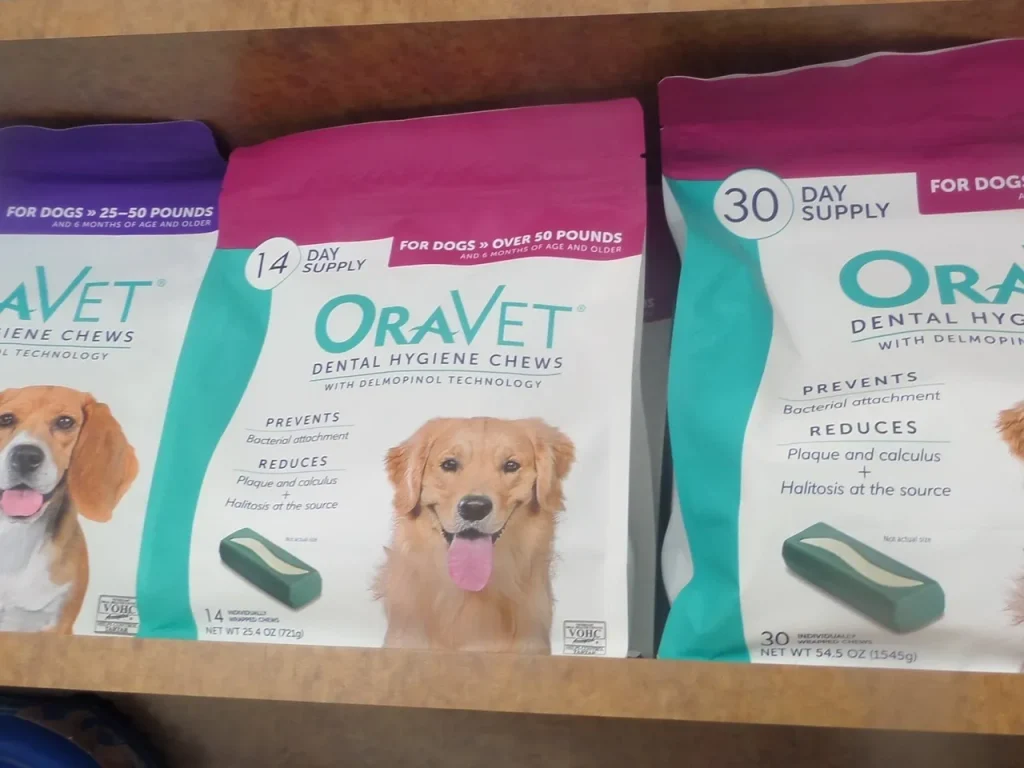
 Research shows that 80% of dogs over age 3 already have some form of gum disease. While daily brushing might be the most effective, that is a difficult thing for most owners to accomplish (myself included!) Giving your dog something to chew may be the next best thing. Chewing stimulates salivation which helps wash food debris and bacteria from the teeth. Enzymes in saliva also help fight bacteria at the gum line.
Dogs don’t chew gum (and be sure to keep any sugar-free gum, which contains xylitol, well out of their reach), so what else can they chew? The shape of the chew is very important – it should involve the entire tooth and be able to scrape plaque and soft tartar off the tooth. Many chews also contain chemicals as anti-tartar agents.
What chews shouldn’t be is hard! Chews like animal bones, nylon chews, hooves, or antlers are much too hard and will wear down teeth over time. They can also fracture teeth, leading to nerve exposure and pain and, ultimately, require extraction of the affected tooth. We extract a lot of fractured 4th premolars (the big teeth on top in the back) in dogs that chew on hard objects!
Place your dog’s favorite chew in a bowl of water and let it sit for 10 minutes or so. If the product doesn’t easily bend, compress or start to dissolve in the fluid, it is too hard to give your dog.
I give my 2 collies an ORAVET chew once a day about 5 days a week. I have found these do a great job in knocking off some accumulated tartar, as well as keep more plaque from accumulating and giving them better breath. I had been cleaning my collie’s teeth every year, but since starting the Oravet chews, they don’t need to be cleaned nearly that often. They also both dash to their kennels each morning in anticipation of getting one! You can learn more at https://www.oravet.com/Pages/about.aspx . You can pick up a 14 count bag from us to try out or order them through our on-line store: https://fourlakesvet.com/online-store
Dr. Scarlett