
Pet Dental Disease Treatment in Monona and Madison
By age three, most dogs and cats already have some degree of dental disease, and because pets hide mouth pain so well, it often goes unnoticed until it is advanced. At Four Lakes Veterinary Clinic, our veterinarians diagnose and treat periodontal disease, broken teeth, and oral infections with Fear Free care that keeps your pet comfortable from exam to recovery.
What Is Dental Disease in Pets?
Dental disease, also called periodontal disease, starts when plaque builds up on the teeth and hardens into tartar. Bacteria in that tartar spread below the gumline, causing inflammation, infection, and eventually damage to the tissues and bone that hold teeth in place. Without treatment, teeth loosen and may need to be removed. Bacteria from a diseased mouth can also travel through the bloodstream and stress the heart, liver, and kidneys, which is why oral health is closely tied to conditions like kidney disease.
Common Dental Problems We Treat
- Gingivitis and periodontal disease
- Fractured or worn teeth
- Tooth root abscesses and facial swelling
- Tooth resorption, a painful condition common in cats
- Retained baby teeth in puppies and kittens
- Oral masses and growths
Signs Your Pet May Have Dental Disease
Watch for bad breath, red or bleeding gums, yellow-brown tartar, drooling, dropping food, chewing on one side, pawing at the mouth, or a sudden preference for soft food. Some pets become irritable or less playful when their mouth hurts. Your veterinarian checks your pet’s teeth and gums at every wellness exam, and any sudden swelling or pain warrants a sick pet visit.
How We Treat Dental Disease
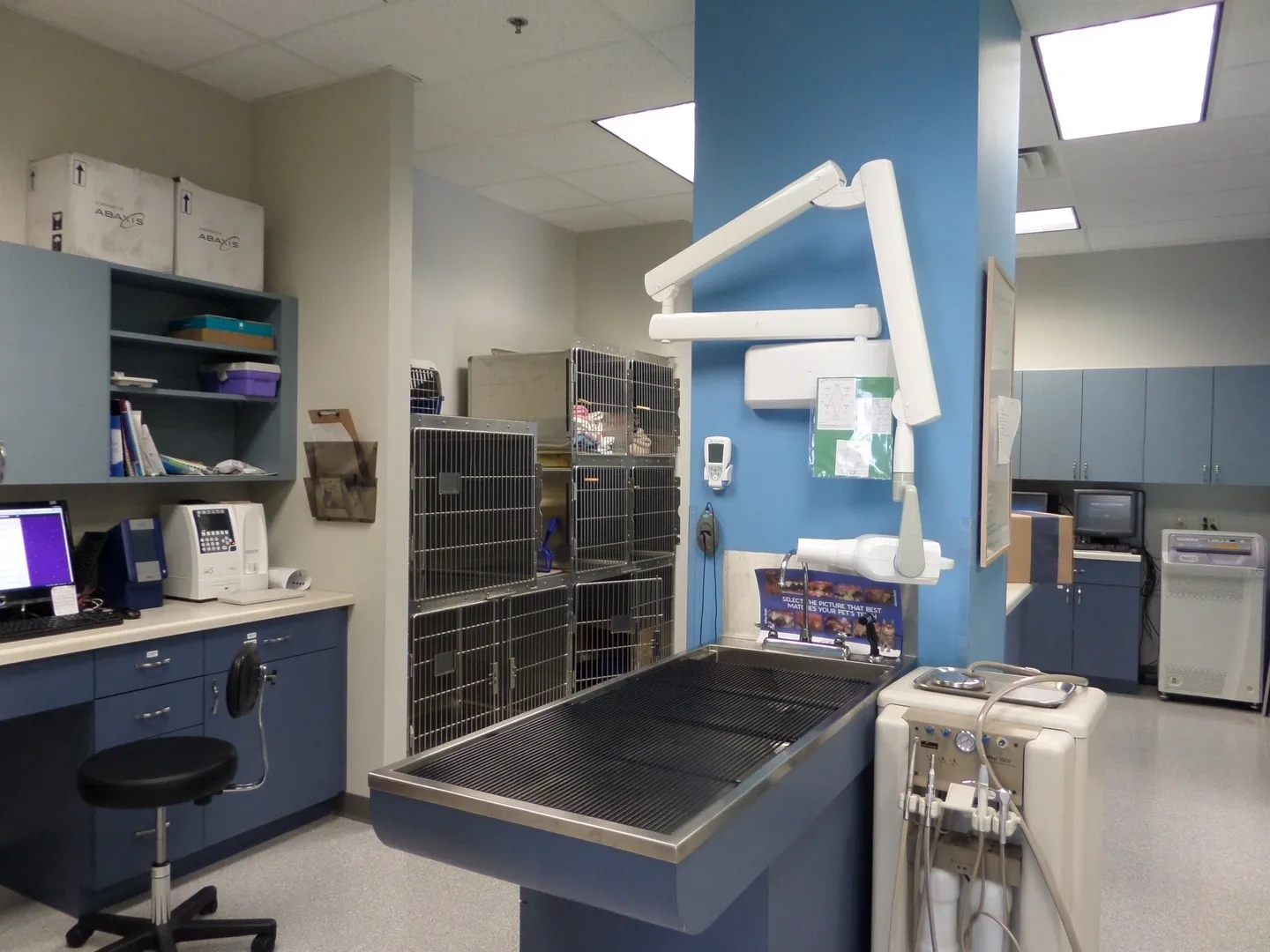
Effective treatment requires a professional dental cleaning under general anesthesia, since up to 60 percent of dental disease is hidden below the gumline. Before the procedure, we recommend pre-anesthetic bloodwork through our laboratory testing to make sure your pet is a safe candidate. During the procedure, our team monitors your pet closely while we scale and polish every tooth, probe the gums, and identify problem teeth. Diseased teeth that cannot be saved are removed with the same care we bring to all of our surgical procedures, and we send your pet home with pain relief and any needed medications from our pharmacy. Laser therapy may also be used to reduce inflammation and support healing after extractions.
Preventing Dental Disease at Home
Daily tooth brushing with a pet-safe toothpaste is the gold standard for home care. Dental chews, water additives, and dental diets can also help slow tartar buildup. Look for products approved by the Veterinary Oral Health Council, and check our current promotions for rebates on Oravet dental chews or browse our online store. Learn more about other health concerns we treat on our conditions page.
Pet Dental Disease FAQs
How common is dental disease in dogs and cats?
Very common. Most dogs and cats show signs of dental disease by age three, and small breed dogs and many cats are especially prone to it.
Is bad breath in pets normal?
No. Persistent bad breath is one of the most common signs of dental disease and usually means bacteria and tartar are building up in your pet’s mouth.
Why does my pet need anesthesia for a dental cleaning?
Anesthesia allows us to clean below the gumline, take a thorough look at every tooth, and treat painful problems safely without causing your pet stress or discomfort.
Is anesthesia safe for older pets?
Age alone is not a reason to avoid dental care. We recommend pre-anesthetic bloodwork, tailor anesthesia to your pet’s health, and monitor them closely throughout the procedure.
What is tooth resorption in cats?
Tooth resorption is a painful condition in which a cat’s tooth structure breaks down from the inside. Affected teeth are usually removed to relieve pain.
How often does my pet need a professional dental cleaning?
Many pets benefit from a cleaning about once a year, though some need them more or less often. Your veterinarian will recommend a schedule based on your pet’s mouth.
Can I brush my pet’s teeth at home?
Yes. Daily brushing with a pet-safe toothpaste is the best way to slow plaque buildup. Never use human toothpaste, which can be harmful to pets.
Give Your Pet a Healthier Smile
If you have noticed bad breath, tartar, or changes in how your pet eats, our team can help. Call Four Lakes Veterinary Clinic at (608) 819-6750 to schedule a dental evaluation in Monona and Madison.