
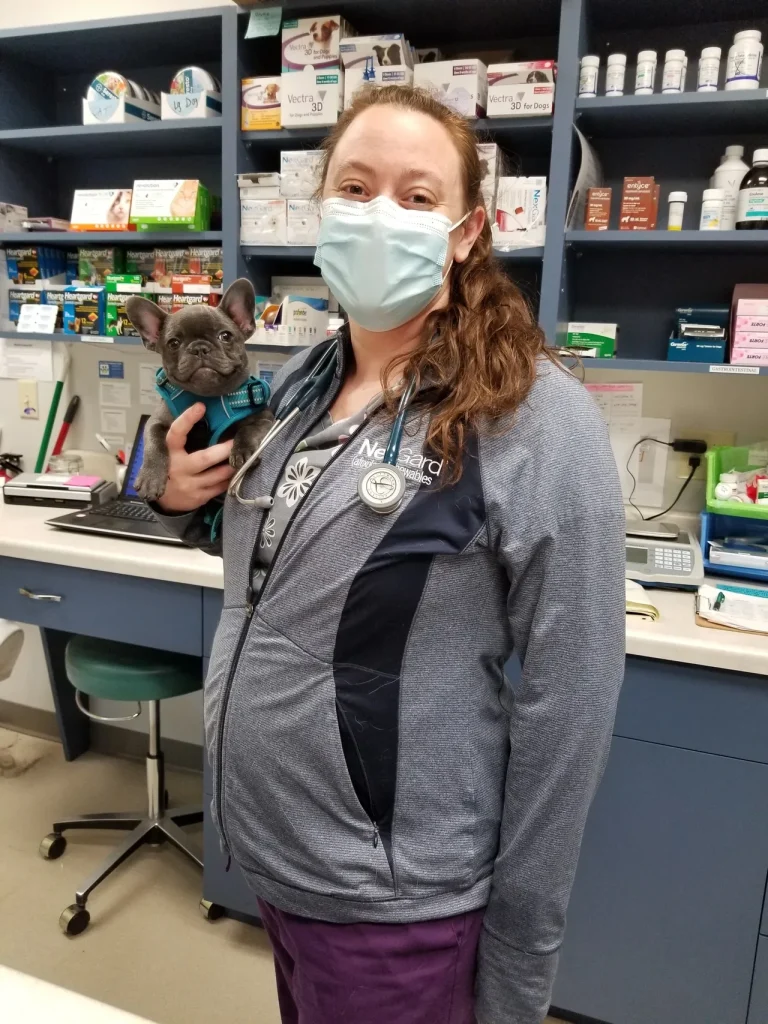
 Having a baby is one of the most exciting times you can experience. There is so much to plan, think about and prepare. But one thing that we don’t always think about is how our furry family members feel about our new addition. Here are the top three things to do to help prepare your dog:
Think ahead. Think about your dog’s current stressors or behavior issues. If you know of anything specific that causes stress for your dog, work with one of our recommended trainers (https://fourlakesvet.com/dog-trainers,) to make the transition as relaxed as possible. If your dog is doing well, then brush up on some of their cues. The most useful post-baby cues are usually sit, hand targeting and place or relax on a mat. If your dog doesn’t know how to relax in a certain place now, check out Karen Overall’s Relaxation Protocol (https://journeydogtraining.com/wp-content/uploads/2017/07/ProtocolforRelaxation.pdf). We highly recommend it! These cues can be useful when you have visitors over, when you have active, supervised time with your baby and dog, and even when you can tell your dog is starting to get stressed. Set your family up for success by practicing these cues in all situations both with and without visitors. Consider trying different locations like your bedroom, the living room, and the baby’s room (if pup will be allowed in there). Dogs aren’t good at generalizing so teaching them to do these things in different scenarios will really help them solidify their training.
Learn your dog’s body language. One of the best ways to prevent problems between your dog and your baby is “listening” to your dog’s body language. There are no bites that are “out of the blue”. Dogs are excellent communicators, unfortunately we just aren’t very good at understanding their version of communication. Familypaws.com is an awesome parent education website that has a lot of resources on dog body language along with other tips. By being aware of what your dog’s behavior, posture and motions mean, you will be able to identify your dog’s early signs of stress so you can intervene before those later, more concerning signs of stress.
Supervise, supervise, supervise! This one is less about prepping and more of an ongoing task once you bring the baby home. While we hate to think about it, most dog bites happen to children with a dog that they know in their home. This can happen in as little as 0.025 seconds. That’s fast! Dogs and children should always be actively supervised when together. When you plan on these interactions, invite your dog to join you and the baby (or toddler). If your dog isn’t interested, that’s okay. If they are showing signs of stress with the interaction, stop and don’t force them into a situation that makes them uncomfortable. It is very important to never punish inappropriate behavior. Instead, use the cues that you’ve already worked on to help them choose a more appropriate behavior, like “go to mat” or “touch”, which both help move your dog into a more comfortable situation. When you can’t actively supervise your dog and baby (think making dinner or getting ready in the morning), plan ahead and put your dog in their crate with a frozen kong or feeder toy. Other safe options include separating them with a baby gate or playpen to create safe spaces for both parties.
There is so much to consider when bringing a baby home to your dog, but these things should get you off to a great start. As always, if you have any questions or would like more advice don’t hesitate to reach out to the staff and doctors at Four Lakes. We are always here to help!
-Dr. Anne McClanahan