
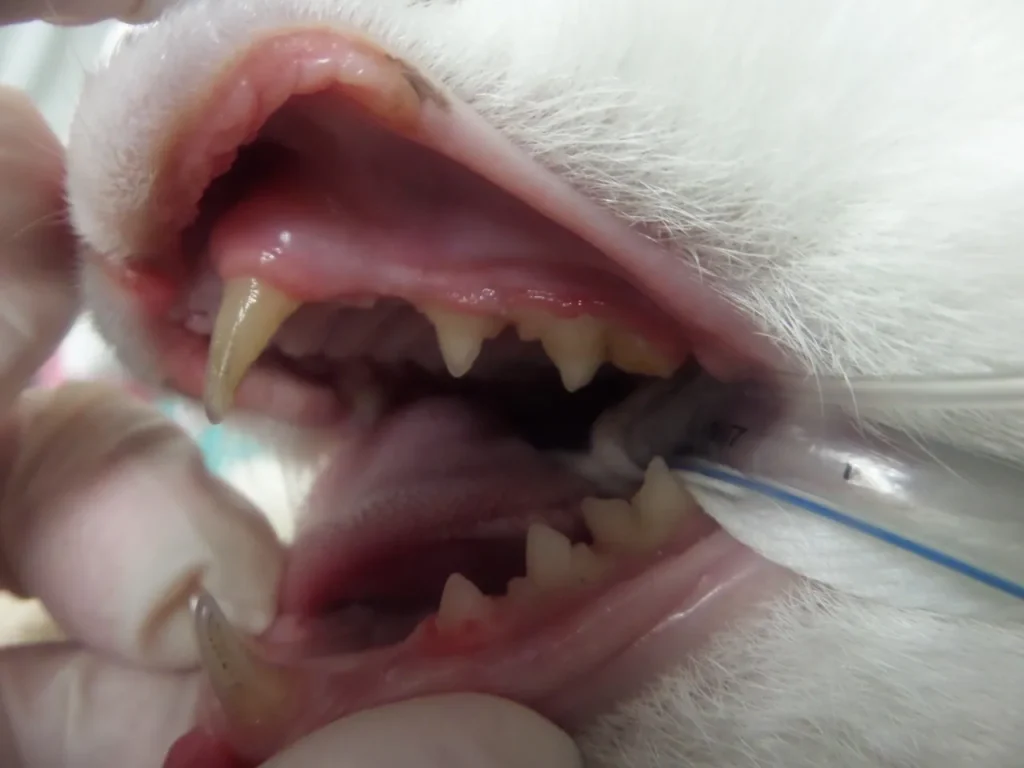
 When we examine your cat’s teeth during their annual exam, we are looking for tartar and plaque, but of more importance, signs of TR – tooth resorption, which can be very painful. Tooth resorption affects up to 75% of adult cats, starting around 5 years of age, and is the number one reason we recommend dental surgery and extract teeth.
Tooth resorption is progressive, starting below the gum line where we can only see it with dental X-rays. Over time, the destruction continues into the enamel and dentin of the tooth crown. There are no clinical signs when the “hole” is under the gum line, but once it destroys the attachment of the gum, the lesion is exposed to bacteria in the mouth. This is now a painful lesion, whether your cat shows obvious pain or not. In many cats, you may not notice any changes at all, but there may be increased salivation, decreased appetite, difficulty chewing, face rubbing, jaw chattering (we notice this frequently if we touch the red gum during the exam), head shaking, or sneezing.
Once we see signs of TR, the only treatment is to extract the tooth. Removing the tooth removes the source of pain in the mouth and the cat will eat better and have more energy overall. We do take dental X-rays of all the teeth during a dental procedure, so if there are more lesions under the gum line that we haven’t seen yet, we will extract those teeth at the same time.
Unfortunately, we don’t know the specific cause of TR in cats. This dental disease destroys the tooth’s enamel, dentin, and cementum. Research has shown that diet may be a major factor. There seems to be increased prevalence in cats that gulp their food (instead of chewing it), eat only table food, drink municipal water (versus well water), eat raw liver or low-calcium diets, and eat foods high in magnesium. Besides drinking city water and the “gulping” of food, most of those risk factors don’t apply to our patients. There is a genetic component, as well, as purebred cats are much more likely to develop TR. Interestingly, TR is much less common in feral cats.
It is possible that TR could be caused by an acidic oral environment, secondary to hairball regurgitation or high acidity in dry foods. This is interesting because in humans if you have more acidic saliva, you are more likely to develop cavities, whereas an alkaline saliva is more likely to lead to more plaque and tartar accumulation, but fewer cavities. One way for people to make their saliva more alkaline is to eat more vegetables. It might be worth encouraging your cat to eat more vegetables when they are young – some cats like lettuce or kale, steamed zucchini, or cauliflower. It is worth a try!
Home care, like brushing teeth or feeding a dental diet, has no impact on tooth resorption. Dental diets or food additives designed to help remove plaque can keep teeth more white, but won’t change TR. If you are looking for good dental products for your cat, check out the Veterinary Oral Health Council (VOHC) website before you buy!